Born in Paris in 1968, Eric Bottero graduated from the École des Gobelins in 1990.
Discovered in 1991 by PHOTO magazine, he quickly made a name for himself in fashion photography, working for both editorial and advertising clients. A recognized specialist in still life and jewelry photography, he has collaborated with prestigious publications such as Vogue Gioiello, Vogue Pelle, L’Officiel and Madame Figaro, as well as with leading agencies and iconic brands including Air France, Shiseido, Audemars Piguet, K-Way, Peugeot,Toshiba...
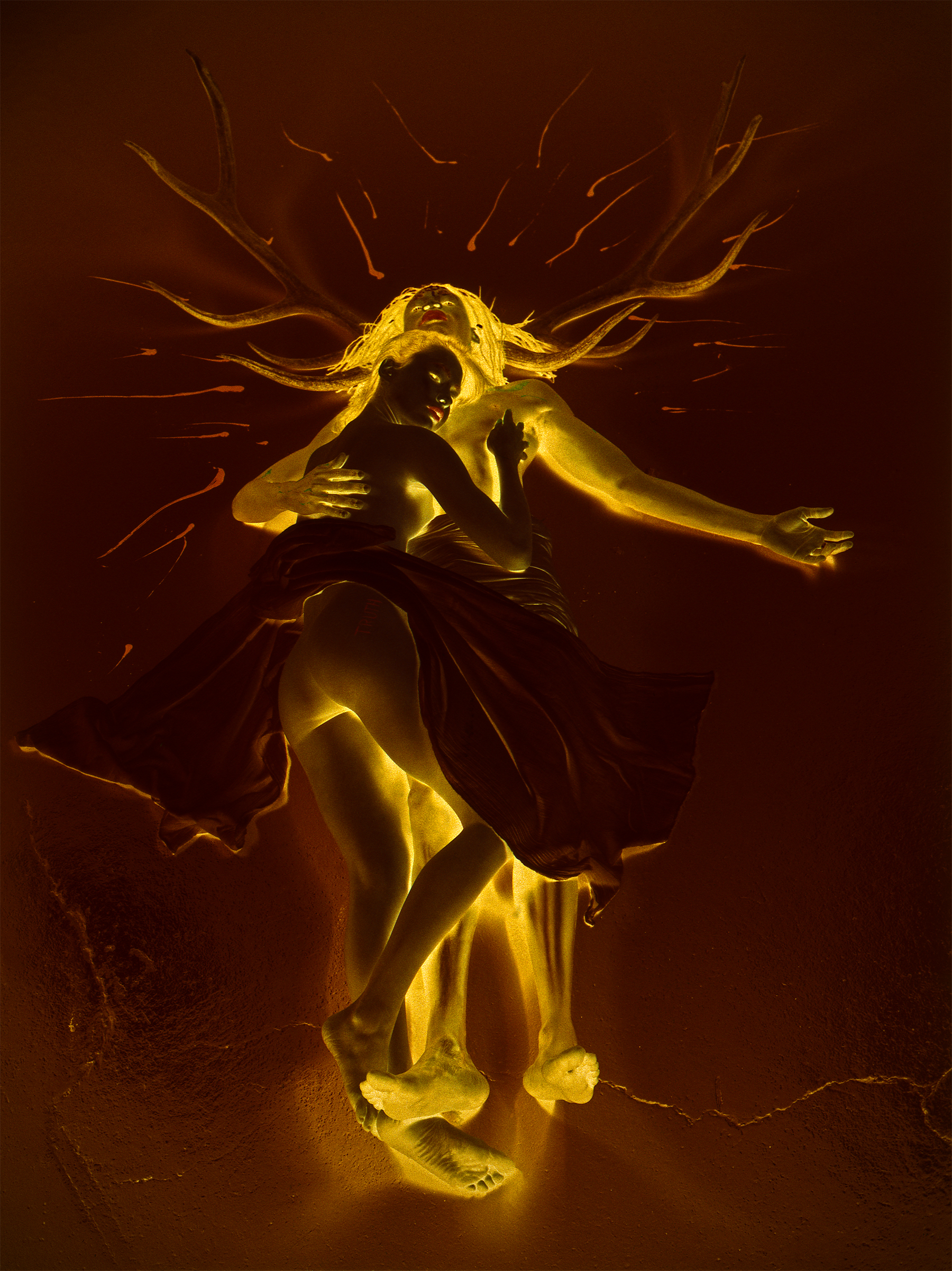
By the late 1990s, Eric Bottero began to pursue a more experimental and personal approach. He explored the creative potential of color negatives, developing a unique chromatic spectrum and technical process that altered the behavior of the photographic emulsion. Through this innovative method, he questions the very perception of the photographic image, offering a radiant, poetic vision of the world and humanity.
This marked the beginning of a parallel artistic career, which he has carried on alongside his commissioned work to this day.
In the early 2000s, Bottero expanded his practice into three-dimensional forms, creating by hand the very subjects of his photographs. His series on masks and child soldiers are significant examples of this hybrid approach, blending the tangible and the symbolic. His work has been acknowledged by major institutions such as the Galerie Valois, the L’Oréal Foundation, and the Bibliothèque nationale de France.
No portrait of Eric Bottero would be complete without mentioning Africa, an inexhaustible source of inspiration for over thirty years. The continent has continuously drawn him out of the studio and into the world, enriching his understanding of otherness, primitivism, mysticism, and magic. His collaborations with African artists have profoundly shaped his vision and his art.
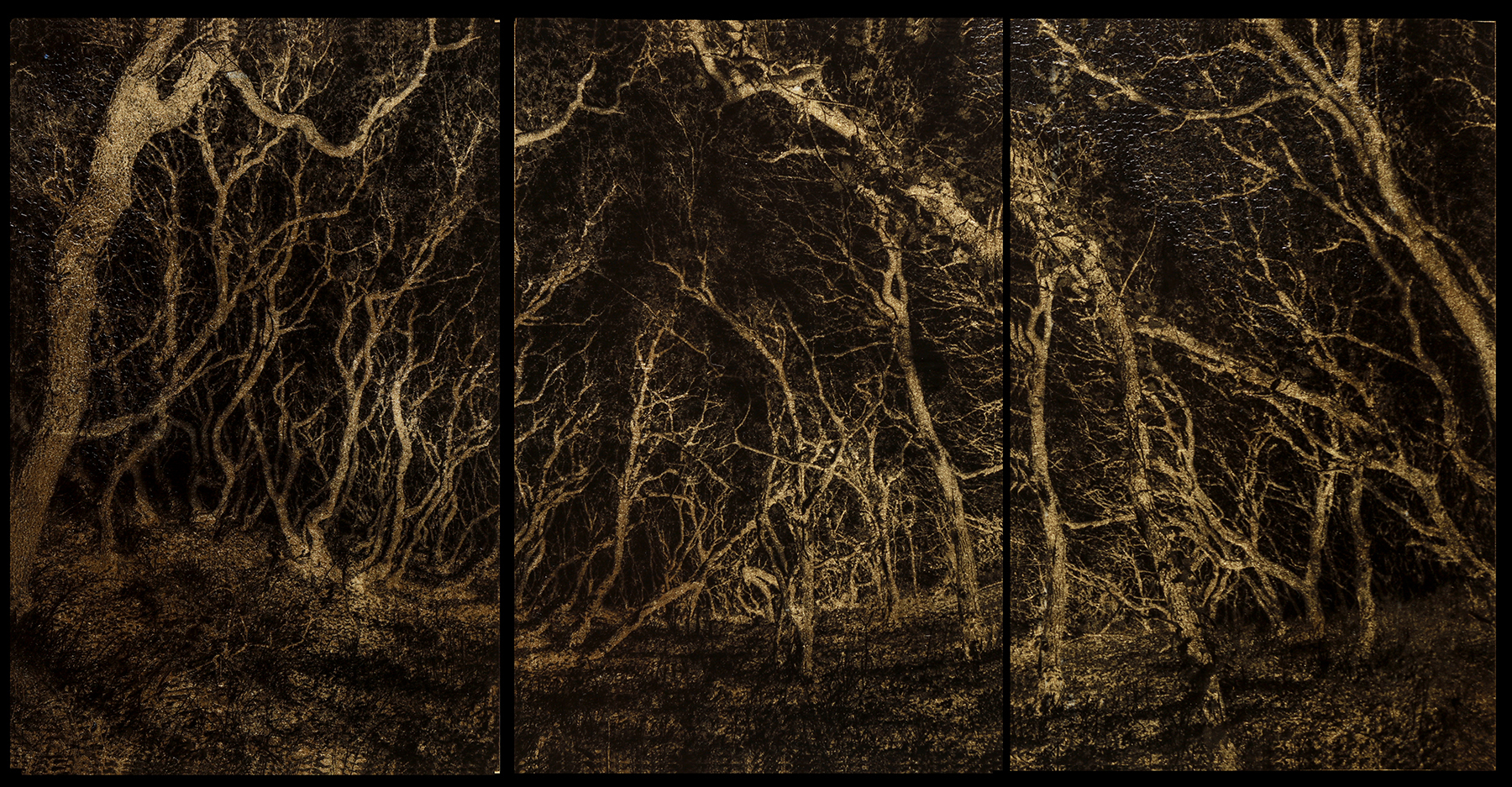
It is Life itself that fuels Eric Bottero’s inspiration. In return, he offers rare and evocative works, such as his recent triptychs of black-and-white forest negatives on gold leaf — contemplative images where light and matter seem to breathe together.
To be continued…
Discovered in 1991 by PHOTO magazine, he quickly made a name for himself in fashion photography, working for both editorial and advertising clients. A recognized specialist in still life and jewelry photography, he has collaborated with prestigious publications such as Vogue Gioiello, Vogue Pelle, L’Officiel and Madame Figaro, as well as with leading agencies and iconic brands including Air France, Shiseido, Audemars Piguet, K-Way, Peugeot,Toshiba...
By the late 1990s, Eric Bottero began to pursue a more experimental and personal approach. He explored the creative potential of color negatives, developing a unique chromatic spectrum and technical process that altered the behavior of the photographic emulsion. Through this innovative method, he questions the very perception of the photographic image, offering a radiant, poetic vision of the world and humanity.
This marked the beginning of a parallel artistic career, which he has carried on alongside his commissioned work to this day.
In the early 2000s, Bottero expanded his practice into three-dimensional forms, creating by hand the very subjects of his photographs. His series on masks and child soldiers are significant examples of this hybrid approach, blending the tangible and the symbolic. His work has been acknowledged by major institutions such as the Galerie Valois, the L’Oréal Foundation, and the Bibliothèque nationale de France.
No portrait of Eric Bottero would be complete without mentioning Africa, an inexhaustible source of inspiration for over thirty years. The continent has continuously drawn him out of the studio and into the world, enriching his understanding of otherness, primitivism, mysticism, and magic. His collaborations with African artists have profoundly shaped his vision and his art.
It is Life itself that fuels Eric Bottero’s inspiration. In return, he offers rare and evocative works, such as his recent triptychs of black-and-white forest negatives on gold leaf — contemplative images where light and matter seem to breathe together.
To be continued…
Né à Paris en 1968, Eric Bottero est diplômé de l’École des Gobelins en 1990.
Repéré dès 1991 par le magazine PHOTO, il se fait rapidement un nom dans la photographie de mode, collaborant avec la presse et la publicité. Spécialiste reconnu de la photographie d’objet et de bijou, il travaille pour de prestigieux magazines tels que Vogue Gioiello, Vogue Pelle, L’Officiel ou Madame Figaro, ainsi que pour de grandes agences et des marques emblématiques : Air France, Shiseido, Audemars Piguet, K-Way, Peugeot, Toshiba, entre autres.
À la fin des années 1990, Eric Bottero amorce une démarche plus expérimentale et introspective. Il explore les potentialités du négatif couleur, développant un spectre chromatique et un procédé technique singulier qui modifient la réaction de la gélatine argentique. Ce travail novateur interroge la perception photographique et propose une vision irradiée et poétique du monde et de l’humanité.
Cette évolution marque le début d’une carrière artistique qu’il mènera en parallèle de ses commandes professionnelles, et qui se poursuit encore aujourd’hui.
Au début des années 2000, il étend son champ de recherche au volume et à la sculpture, fabriquant lui-même les sujets de ses prises de vue. Ses séries sur les masques et les enfants soldats illustrent cette approche hybride, à la frontière du réel et du symbolique. Son œuvre est saluée par d’importantes institutions, parmi lesquelles la Galerie Valois, la Fondation L’Oréal et la Bibliothèque nationale de France.
Mais on ne saurait évoquer Eric Bottero sans parler de l’Afrique, source d’inspiration essentielle et constante depuis plus de trente ans. Ce continent, qui l’incite à sortir du studio pour aller à la rencontre du monde, nourrit sa réflexion sur l’altérité, le primitivisme, le mysticisme et la magie. Ses échanges avec des artistes africains ont profondément marqué son regard et son œuvre.
C’est le Vivant qui inspire Eric Bottero. En retour, il en offre une vision rare et précieuse à travers des œuvres singulières, comme ses récents triptyques de négatifs noir et blanc de forêts sur feuilles d’or — véritables méditations visuelles sur la lumière et la matière.
À suivre…
Repéré dès 1991 par le magazine PHOTO, il se fait rapidement un nom dans la photographie de mode, collaborant avec la presse et la publicité. Spécialiste reconnu de la photographie d’objet et de bijou, il travaille pour de prestigieux magazines tels que Vogue Gioiello, Vogue Pelle, L’Officiel ou Madame Figaro, ainsi que pour de grandes agences et des marques emblématiques : Air France, Shiseido, Audemars Piguet, K-Way, Peugeot, Toshiba, entre autres.
À la fin des années 1990, Eric Bottero amorce une démarche plus expérimentale et introspective. Il explore les potentialités du négatif couleur, développant un spectre chromatique et un procédé technique singulier qui modifient la réaction de la gélatine argentique. Ce travail novateur interroge la perception photographique et propose une vision irradiée et poétique du monde et de l’humanité.
Cette évolution marque le début d’une carrière artistique qu’il mènera en parallèle de ses commandes professionnelles, et qui se poursuit encore aujourd’hui.
Au début des années 2000, il étend son champ de recherche au volume et à la sculpture, fabriquant lui-même les sujets de ses prises de vue. Ses séries sur les masques et les enfants soldats illustrent cette approche hybride, à la frontière du réel et du symbolique. Son œuvre est saluée par d’importantes institutions, parmi lesquelles la Galerie Valois, la Fondation L’Oréal et la Bibliothèque nationale de France.
Mais on ne saurait évoquer Eric Bottero sans parler de l’Afrique, source d’inspiration essentielle et constante depuis plus de trente ans. Ce continent, qui l’incite à sortir du studio pour aller à la rencontre du monde, nourrit sa réflexion sur l’altérité, le primitivisme, le mysticisme et la magie. Ses échanges avec des artistes africains ont profondément marqué son regard et son œuvre.
C’est le Vivant qui inspire Eric Bottero. En retour, il en offre une vision rare et précieuse à travers des œuvres singulières, comme ses récents triptyques de négatifs noir et blanc de forêts sur feuilles d’or — véritables méditations visuelles sur la lumière et la matière.
À suivre…
Coming Soon
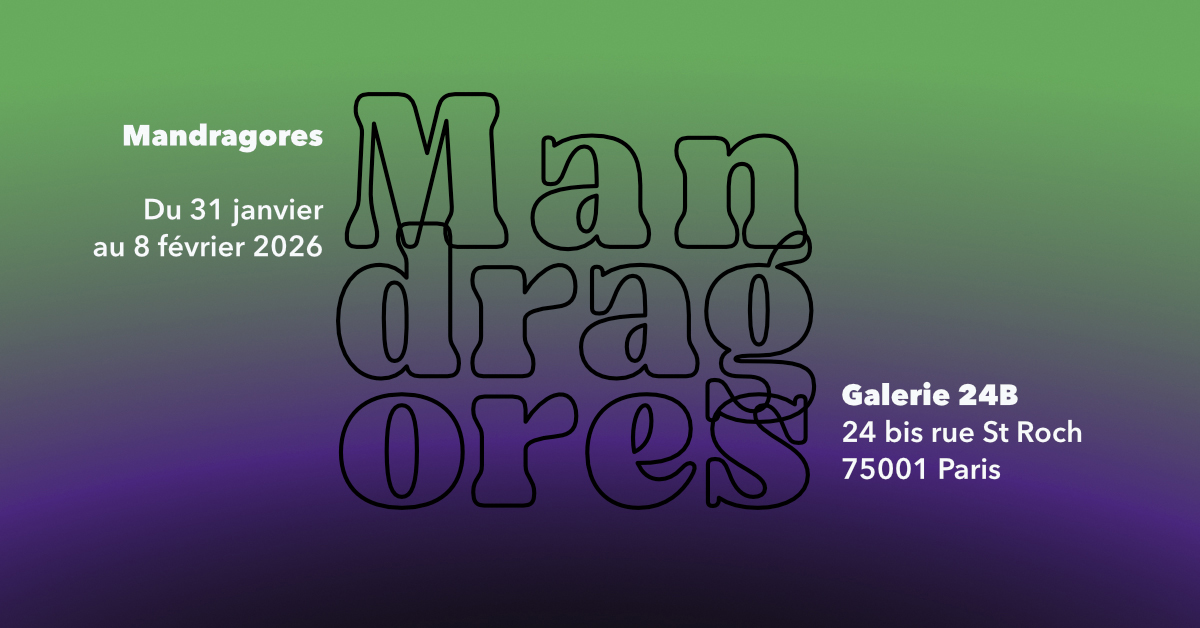 Mandragores – Du 31 janvier au 8 février 2026 (11h-19h : à partir du dimanche 1er février 2026)
Vernissage le 31 janvier (17h-22h)
Galerie 24b, 24 bis rue Saint-Roch, 75001 Paris
De la mort, on s’en remet rarement, elle arrive à des heures indues en tirant la vie par les pieds. Travailler sur la mort, c’est estimer ses chances et celles des autres et en rendre compte par l’image, évoquer les liens invisibles entre la vie et la mort. Dans ce salon, le cv, la nationalité, les origines sociales, le genre et l’âge, n’ont aucune importance ; l’art comme la mort, l’amour et l’érotisme se fichent de toutes ces notions.
Le titre de l’exposition, Mandragores, fait référence à cette plante à la mythologie puissante. La plante est toxique, elle provoque des hallucinations, mais elle est également aphrodisiaque. Sa racine est anthropomorphique, on y découvre des jambes enlacées et elle pousse un cri mortel lorsqu’on veut l’arracher. La mandragore pousse sous la semence des pendus. Recherchée, elle est conservée dans un flacon et réalise les désirs de celui qui la possède, mais il faut s’en débarrasser avant de mourir sous peine de voir le diable emporter l’âme de son possesseur, les anglais accusèrent Jeanne d’Arc d’en posséder une. Les mandragores sont magiques, comme ce salon dans la galerie 24b qui est situé sur l’emplacement de l’ancien cimetière de l’église Saint Roch. Les oeuvres exposées dans Mandragores, si vous les regardez attentivement, ont ce caractère étonnant d’entrer en contact avec les morts, vous y retrouverez vos proches et vos amis partis trop tôt, victimes de maladies ou de la violence de nos sociétés contemporaines.
Laurent Quénéhen, commissaire de Mandragores.
Mandrakes – From 31 January to 8 February 2026
Galerie 24b, 24 bis rue Saint-Roch, 75001 Paris
Death is something we rarely recover from, it arrives at unexpected moments, dragging life away. Working on death means assessing one's own chances and those of others and expressing this through images, evoking the invisible links between life and death. In this salon, CVs, nationality, social origins, gender and age don’t have any place; art, like death, love and eroticism, cares nothing for all these claims.
The title of the exhibition, Mandrakes, refers to this plant with its powerful mythology. The plant is toxic, causing hallucinations, but it is also an aphrodisiac. Its root is anthropomorphic, with entwined legs, and it lets out a deadly cry when someone tries to pull it up. The mandrake grows under the seeds of hanged men. Highly sought after, it is kept in a bottle and fulfils the desires of its owner, but it must be disposed of before death, otherwise the devil will take the soul of its owner. The English accused Joan of Arc of possessing one. Mandrake roots are magical, like this room in Gallery 24b, which is located on the site of the former cemetery of Saint Roch Church. If you look closely at the works on display in Mandrakes, you will see that they have the astonishing ability to connect with the dead. You will find your friends and loved ones who left us too soon, victims of disease or the violence of our contemporary societies.
Laurent Quénéhen, curator of Mandrakes.
Last Exhibitions




ESPACE COSMOPOLIS
LE BÉNIN EN MAJESTÉ
LE BÉNIN EN MAJESTÉ
